
From Steam Engines to AI: The Jevons Paradox
What Jevons paradox teaches us about AI and the fear of job loss.


In 19th-century England, coal was king. It powered the ships, the factories, and the beating heart of the Industrial Revolution.
Back then, steam engines were marvels of modern engineering, but terribly inefficient. Each machine burned mountains of coal for a modest amount of power. So, inventors raced to make them better.
Then came James Watt, who revolutionized the engine design. His machine was dramatically more efficient, it could do the same work while consuming far less coal.
Economists and policymakers were thrilled. "At last," they thought, "we'll save our coal reserves! Efficiency will bring sustainability." But something entirely unexpected happened. Instead of coal consumption falling, it skyrocketed.
Factories multiplied. Railways expanded. Shipping boomed. The cheaper and more efficient steam power became, the more people used it. One man, William Stanley Jevons, looked at this strange outcome and wrote in his book The Coal Question (1865):
"It is a confusion of ideas to suppose that the economical use of fuel is equivalent to diminished consumption. The very contrary is the truth."
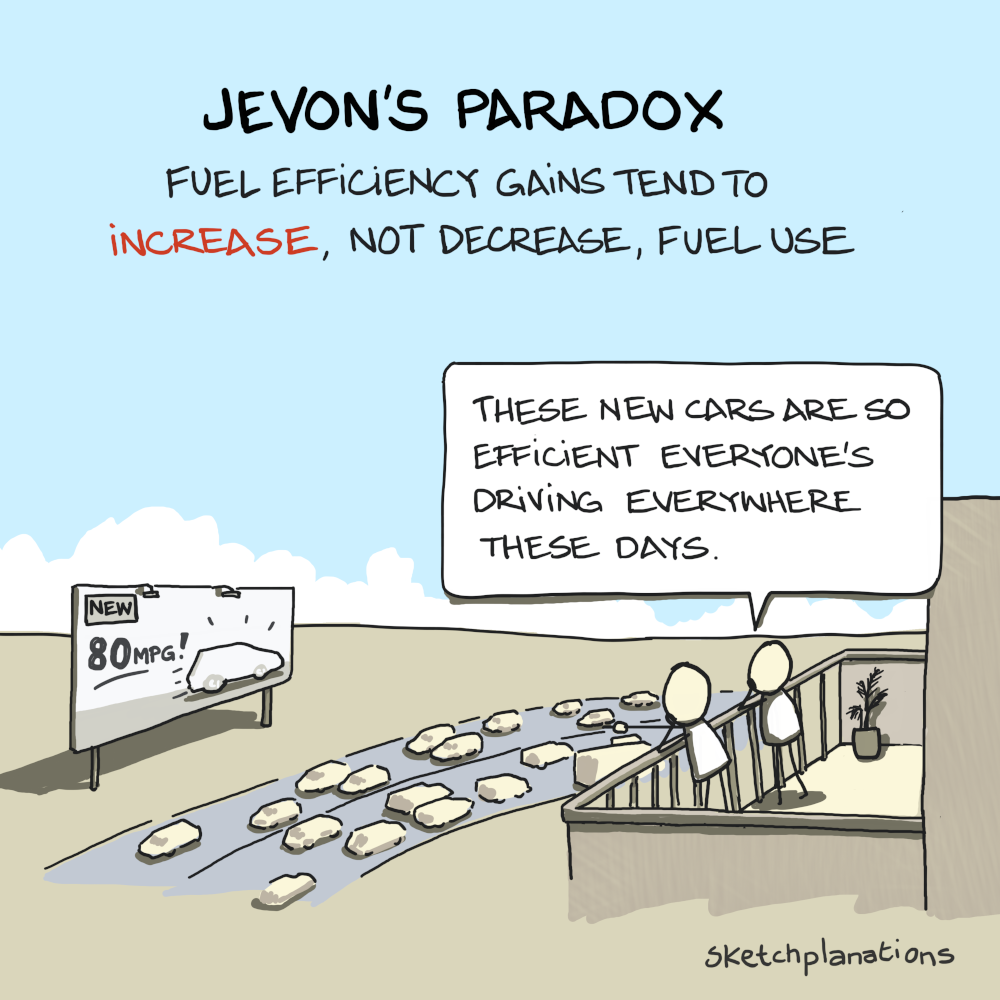
This became known as Jevons Paradox, the idea that efficiency often increases total consumption, not decreases.
Fast-forward to 2025: Enter Artificial Intelligence
Today, we're watching history repeat itself, not with coal, but with cognitive power. Artificial Intelligence is the new "engine" of our age. It makes knowledge work such as coding, writing, designing, analyzing - vastly more efficient.
And once again, people are worried. "AI will take our jobs," they say. "Soon, humans will have nothing left to do." But Jevons would likely smile knowingly. Because we've seen this movie before.
Back in 2016, Geoffrey Hinton the father of deep learning, who was awarded the 2024 nobel prize in physics, declared that people should stop training radiologists. Because to him it was just completely obvious that within 5 years, deep learning is going to do better than radiologists.
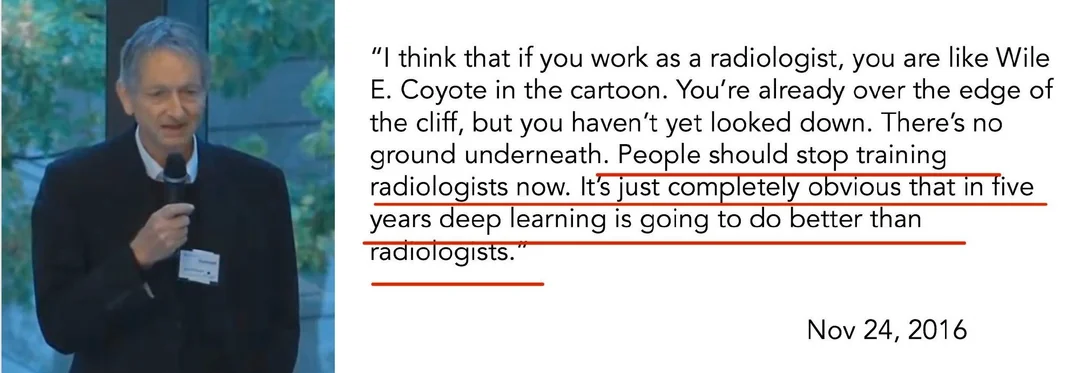
Hinton is one of the pioneers of neural nets, someone who understood better than almost anyone else what the emerging technology was capable of. He was right that deep learning will become really smart in analyzing radiology images, but he was wrong that it would lead to job loss for radiologists in 5 years. Because even almost 10 years later, demand for radiologists increased to an all-time high.
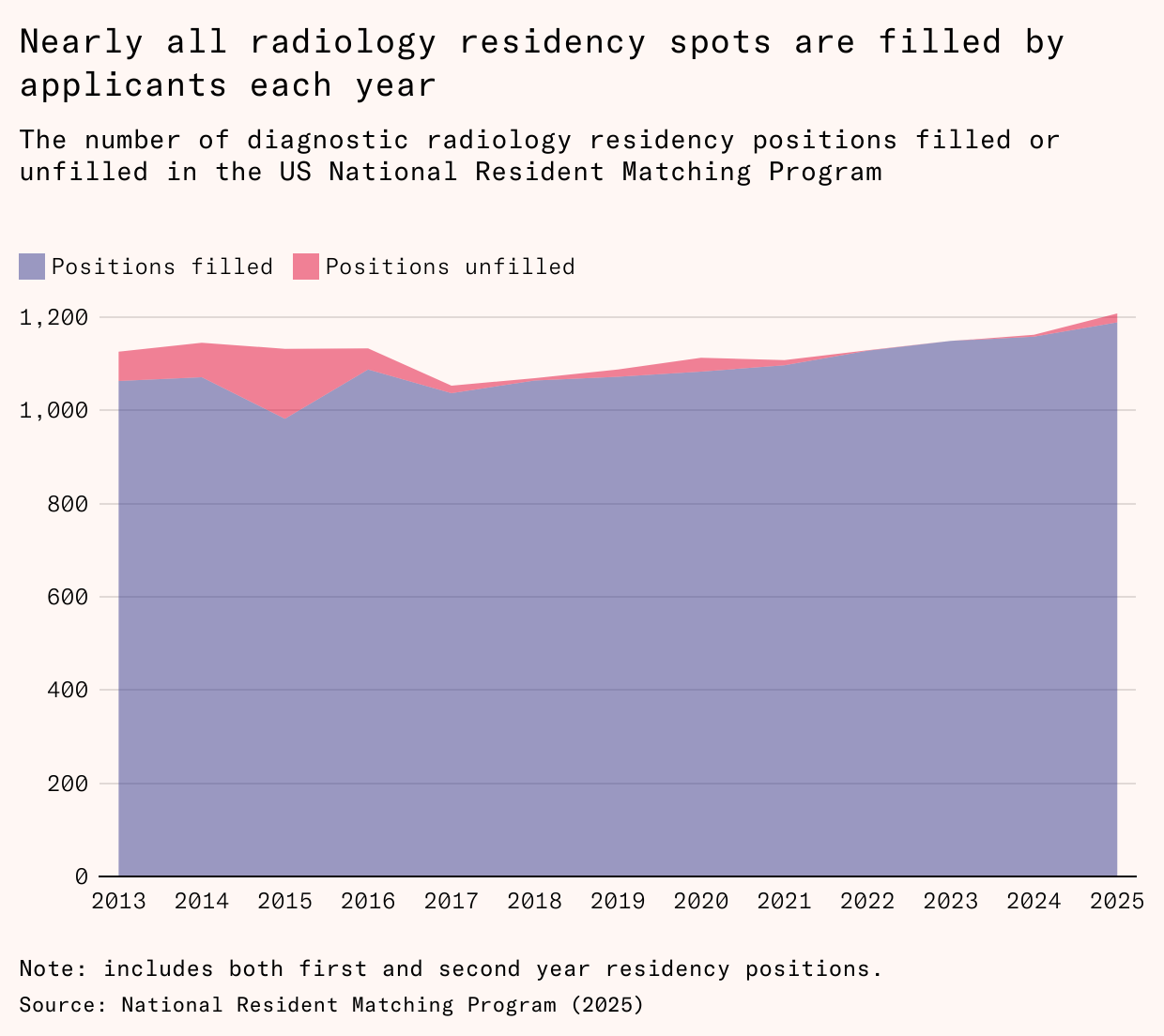
It turns out that when we gave radiologists the tools that sped up one aspect of their job, demand for their services actually increased. Cheaper scans means more scans and more scans means more demand for complex diagnosis and treatment planning from radiologists. In other words, when we use technology to push down the cost of using a resource, in this case MRIs and other imaging techniques, demand for this resource and the services associated with it increased.
So the bottomline: don't take economy advice from a scientist!
The Paradox Reborn
Now let's apply this logic to the current world:
- AI increases efficiency.
Tasks that took hours now take seconds. A single person can do the work of ten. - Efficiency reduces cost.
It becomes cheaper to produce ideas, software, designs, and marketing content. - Reduced cost increases demand.
When something becomes cheap, we use more of it, not less. Businesses now launch more products, create more campaigns, and build more software. - New industries emerge.
Just as steam engines created railroads, mining, and logistics, AI is creating jobs in model tuning, data labeling, AI safety, prompt engineering, agentic systems, and entire startups built around automation.
The paradox reveals a simple truth:
Efficiency doesn't kill demand, it amplifies it. AI won’t eliminate human work; it will transform it.
The Bigger Picture
Technological revolutions don't erase humanity; they expand what it means to be human.
- Steam engines didn't end work, they industrialized it.
- Electricity didn't end craftsmanship, it empowered it.
- And AI won't end knowledge work, it will evolve it.
Now if we look at the big picture in a bigger time scale about how skills went outdated over time, we can see a different situation. Jevons Paradox illustrated how efficiency gains could paradoxically increase total consumption. For a time, this logic also seemed to apply to technology and jobs, automation made work more efficient, yet industries grew larger, demanding even more labor.
But if we zoom out to a grander timescale, the pattern begins to shift. The true challenge isn't job loss, it's skill reinvention.
History shows a clear rhythm: old skills fade, new ones rise. During the Industrial Revolution, machines replaced muscle, but they also created new kinds of work. Horsemen disappeared; drivers emerged. Farmers lost fields to machines, but factories and cities created entirely new economies. Humanity moved from hard labor to intellectual labor.
Now, we stand at the next inflection point, where it's intellect itself that is at stake. AI challenges not our capacity to work harder, but to think differently. The paradox no longer lies in "more efficiency, more use," but in how we redefine the meaning of valuable human contribution.
Each technological leap has elevated civilization: from survival to craftsmanship, from craftsmanship to creativity, and now from creativity to conceptualization. Jevon’s paradox breaks here, because the curve no longer loops back on consumption. It loops upward, toward evolution.
Hence today, those who learn to use AI efficiently, will find themselves at the center of an entirely new economic boom. Jevons taught us that when something becomes more efficient, we don't stop using it, we find new ways to use it everywhere.
And that's exactly what's happening with AI today. When you make something easier, faster, or cheaper, you unlock more imagination, more demand, and more opportunity only if you align yourself with the new waves and capitalize the force.
So next time you hear someone say "AI will take all the jobs," remember, we said the same thing about machines, electricity, and the internet.
But also remember the following as well:
Economists understand behavior - volatile, emotional, and reactive. Scientists understand reality - stable, gradual, and inevitable. One forecasts next few years market dynamics; the other foresees humanity's next evolution. You need to know when to listen to whom.